Shisha in the Ottoman Empire: A Cultural Phenomenon
Shisha, also known as hookah or waterpipe, underwent significant development during the Ottoman Empire, evolving into a widespread cultural and social practice. What began as a symbol of status and sophistication for the elite soon permeated all levels of Ottoman society, shaping social norms, intellectual discourse, and even art. The coffeehouses of the empire became cultural hubs, where shisha smoking was synonymous with relaxation, conversation, and hospitality.
The Origins of Shisha in Ottoman Culture

The history of shisha smoking dates back to Persia in the 16th century, but it was within the Ottoman Empire that it truly became a cultural phenomenon. The Ottomans, known for their appreciation of refined tastes and elaborate social customs, embraced shisha not only as a pastime but also as a symbol of prestige. While the Persians originally used simple pipes, the Ottomans revolutionized shisha, transforming it into an elegant instrument of relaxation and status.
Shisha pipes during the Ottoman era were often ornately designed, reflecting the luxury and grandeur of the empire. They were made from fine materials such as brass, silver, and gold, and featured intricate engravings, geometric patterns, and arabesques. These pipes were often seen in the homes of the wealthy or in the luxurious coffeehouses that were springing up in major Ottoman cities. A finely crafted shisha was a mark of refinement, and owning one was a symbol of wealth and sophistication.
The Role of Ottoman Coffeehouses in Shisha Culture
The rise of shisha in Ottoman society was closely linked to the emergence of coffeehouses, or kahvehane, which became the epicenter of social and intellectual life. Coffeehouses were more than just places to enjoy a hot beverage; they were the heart of urban life, where people from different walks of life—noblemen, merchants, scholars, and poets—would gather. These establishments provided an environment for social interaction, political discussion, and the exchange of ideas, with shisha smoking playing a central role.
In Ottoman coffeehouses, smoking shisha was a communal activity, often shared among friends and acquaintances while discussing literature, philosophy, and politics. The leisurely pace of smoking allowed for deep conversation, and the act of passing the hose from person to person symbolized camaraderie and unity. Shisha smoking was often accompanied by storytelling, poetry readings, or performances of traditional music, reinforcing the sense of community.
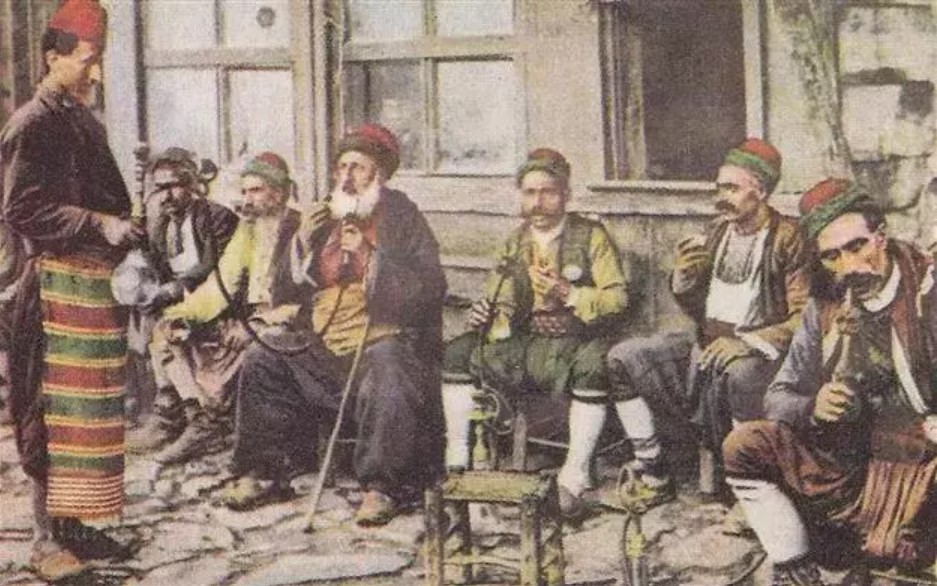
These coffeehouses became a place where new ideas and trends were born. The practice of smoking shisha in public spaces not only elevated its status but also embedded it in the everyday lives of Ottoman citizens. By the 17th century, shisha had become an essential part of Ottoman social customs, making the coffeehouse experience incomplete without it.
Shisha and the Elite: A Symbol of Status

For the Ottoman elite, shisha was not only a recreational activity but also a status symbol. The wealthy and powerful often displayed their shisha pipes as a way to show their affluence and refined taste. These pipes were often customized with precious metals and jewels, making them both functional and decorative. The pipes were a centerpiece at social gatherings in the homes of the wealthy, where guests were invited to enjoy the finest tobaccos in an atmosphere of elegance and sophistication.
The practice of smoking shisha was often seen as a meditative and contemplative activity, particularly for scholars, poets, and intellectuals. The slow pace of shisha smoking allowed for periods of reflection and discussion, making it a perfect complement to the philosophical and poetic discussions that were common in Ottoman intellectual circles. It was in these elite gatherings that the ritualistic nature of shisha smoking was most apparent, with elaborate preparations and protocols surrounding the practice.
Read More Shisha Charcoal Characteristics
VISIT US COCONUT CHARCOAL SHISHA FACTORY
The Evolution of Shisha Design and Craftsmanship

One of the most significant contributions of the Ottoman Empire to the global shisha tradition was the refinement of the waterpipe’s design. The Ottomans innovated upon the basic Persian design, making the waterpipe more efficient, aesthetically pleasing, and enhancing the overall smoking experience. These refinements helped the shisha pipe become more accessible to a broader audience, not just the elite.
The intricate craftsmanship that went into Ottoman shisha pipes was unparalleled. Artisans would spend hours perfecting the body of the pipe, ensuring that the design was not only visually stunning but also functional. The pipes typically consisted of four parts: the head (where the tobacco is placed), the body (which connects the head to the water chamber), the water chamber itself, and the hose. Ottoman artisans paid special attention to each component, ensuring a smoother draw and a more enjoyable smoke.
In addition to the physical refinement of the pipe, the Ottomans were also responsible for improving the tobacco blend used in shisha. The most popular blend at the time was mu‘assel, a mixture of tobacco and honey or molasses, which provided a sweeter and smoother smoking experience compared to traditional loose-leaf tobacco. This blend would later become the basis for modern shisha flavors.
VISIT US COCONUT CHARCOAL SHISHA FACTORY
The Spread of Shisha Beyond the Ottoman Empire
As the Ottoman Empire expanded, so did its cultural practices, including shisha. From the Balkans to North Africa, and eventually Europe, shisha spread far beyond its origins in the Middle East. The popularity of shisha was not confined to the Ottoman heartland, and it became a global trend by the 17th century. European travelers to the Ottoman Empire were often fascinated by the sight of shisha pipes in coffeehouses and brought the tradition back to their home countries, where it gained a foothold in certain aristocratic circles. Shisha’s spread was also facilitated by trade routes, where tobacco and shisha pipes were among the goods exchanged. As these items traveled across continents, so did the practice of shisha smoking, with each region adapting the tradition to fit its own cultural practices. By the time of the 19th century, shisha had become a global phenomenon, enjoyed by people of all classes and backgrounds.
Conclusion
The Ottoman Empire played a pivotal role in transforming shisha from a regional practice in Persia to a global cultural phenomenon. Through the empire’s coffeehouses, art, and hospitality traditions, shisha became an integral part of daily life and social interaction. The Ottomans also made significant contributions to the design and refinement of shisha pipes, establishing the standards for the modern waterpipe. Today, the legacy of Ottoman shisha culture can be seen around the world, in modern hookah lounges and social gatherings, where the tradition of sharing a pipe remains a symbol of relaxation, conversation, and community.
Shisha in the Ottoman Empire
Curious about how shisha continued its journey across the globe? Our next article will uncover the global spread of shisha, from the Middle East to modern-day lounges in Europe and beyond. Stay tuned!

Harumcoco – Coconut Charcoal Shisha Supplier
Harumcoco Indonesia