Sustainability has become a critical consideration in global trade. Buyers today are not only concerned about product quality and price, but also about how products are made and where raw materials come from. In the charcoal industry, sustainability plays an especially important role due to its close relationship with natural resources.
This is why many international buyers look closely at the practices of an Indonesian charcoal supplier. Indonesia has emerged as a leading source of coconut shell charcoal, offering solutions that balance environmental responsibility with industrial-scale production. This article explains the key sustainability practices that define responsible Indonesian charcoal suppliers.
Use of Renewable Coconut Shell Raw Materials

One of the most important sustainability advantages of Indonesian charcoal production is the use of coconut shells. Coconut shells are a natural byproduct of the food and agricultural industry, making them a renewable and responsible raw material.
A responsible Indonesian charcoal supplier relies on:
– Coconut shells sourced from existing agricultural waste
– Renewable materials rather than harvested wood
– Continuous supply without deforestation pressure
This approach significantly reduces environmental impact compared to wood-based charcoal production.
Efficient Carbonization and Production Methods
Modern sustainability goes beyond raw materials. Production efficiency plays a major role in reducing waste and emissions.
Many professional Indonesian charcoal suppliers invest in:
– Improved carbonization techniques
– Better temperature control during production
– Optimized use of raw materials
These methods increase charcoal yield while minimizing unnecessary waste and energy loss.
Waste Reduction and Material Optimization
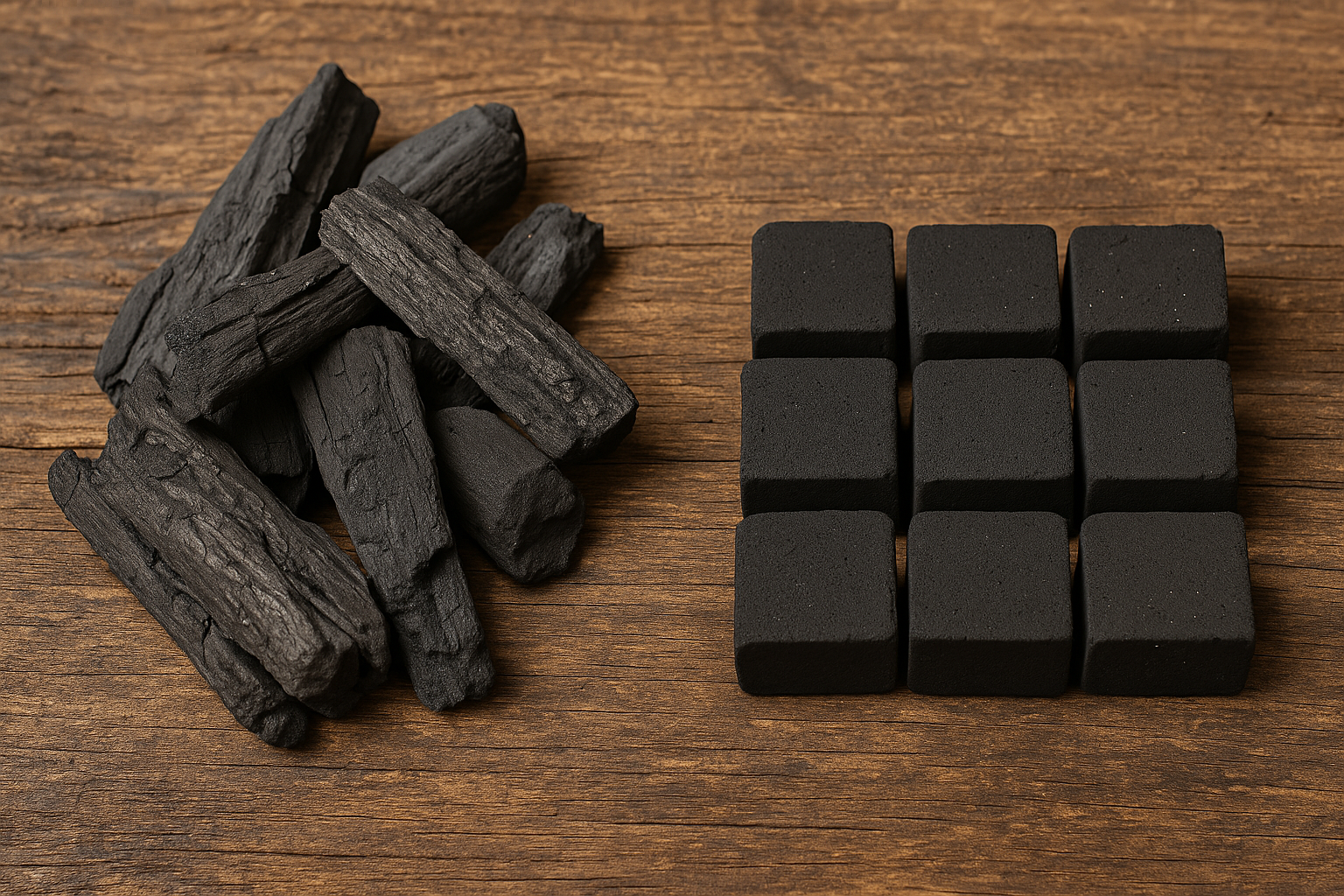
Sustainable suppliers aim to reduce waste at every stage of production.
A responsible Indonesian charcoal supplier focuses on:
– Reusing charcoal powder for briquette production
– Reducing broken or rejected pieces through better handling
– Improving production planning to minimize material loss
By optimizing resources, suppliers create a more efficient and environmentally conscious operation.
Read More Shisha Charcoal Characteristics
VISIT US COCONUT CHARCOAL SHISHA FACTORY
Low-Emission Production Improvements
While charcoal production traditionally involves emissions, many Indonesian suppliers are taking steps to reduce environmental impact.
Progressive Indonesian charcoal suppliers are adopting:
– Cleaner carbonization processes
– Better airflow and heat management systems
– Gradual improvements to reduce smoke and emissions
These efforts reflect a growing commitment to responsible manufacturing.
Sustainability as a Competitive Advantage
For global buyers, sustainability is becoming a key differentiator. Brands that work with responsible suppliers strengthen their own market positioning.
Choosing a sustainability-focused Indonesian charcoal supplier helps buyers:
– Align with environmental expectations in global markets
– Reduce reputational risk
– Build stronger brand credibility
Sustainability is no longer optional—it is a competitive advantage.
Responsible Sourcing with the Right Indonesian Charcoal Supplier
Sustainability in charcoal production is built on renewable raw materials, efficient manufacturing, waste reduction, and long-term responsibility. Indonesian suppliers that embrace these principles play an important role in shaping a more responsible global charcoal industry.
HarumCoco is an Indonesian supplier that values sustainability alongside quality and consistency. By focusing on coconut shell raw materials and responsible production practices, HarumCoco supports international buyers seeking dependable and environmentally conscious partnerships.
If you are looking for an Indonesian charcoal supplier committed to sustainability and long-term value, HarumCoco is ready to work with you.

Harumcoco – Coconut Charcoal Shisha Supplier
Harumcoco Indonesia